
Progetto/mostra Ortigia Settembre 2021
Hotel Kutkowsy
In English below
Testo critico di Francesca Greco
C’è anche chi mi crede un idiota, non ho mai scoperto perché. In verità, sono stato talmente malato da non essere molto diverso da un idiota; ma com’è possibile che sia idiota anche adesso, quando, io per primo, mi accorgo che la gente mi considera tale? Io entro e penso: “Mi credono idiota, ma io sono intelligente, e loro non lo sospettano nemmeno”
Fëdor Dostoevskij, L’idiota
Giufà è davvero un credulone? No, fa credere agli altri di esserlo. Questo è il suo modo di essere ovunque, in ogni luogo e in ogni tempo. Crediamo di ingannarlo, ma è lui a farlo. Giufà è un monito di quello che non-si-dovrebbe-essere – “Non fare il Giufà!”, raccomandano le madri e i padri – eppure si è, giorno per giorno. Almeno una volta ognuno di noi ha scardinato una porta e ha camminato in giro per la città, dimostrando di non aver capito la sottigliezza e di essersi fermato alla superficie delle cose.
Chi, d’altronde, non è stato almeno una volta lo scemo del villaggio, del proprio villaggio?
Giufà è aneddoto, è parola passata di bocca in bocca, è cosa detta e non detta; vola via come il vento, non è scritto ma passato e trapassato. Gli è stato dato un nome, ma non è tradizione, è tutte le cose fatte distrattamente, involontariamente, è tutti gli errori commessi che vanno corretti, è uno strumento e, come tale, si deve imparare a maneggiare e conoscere.
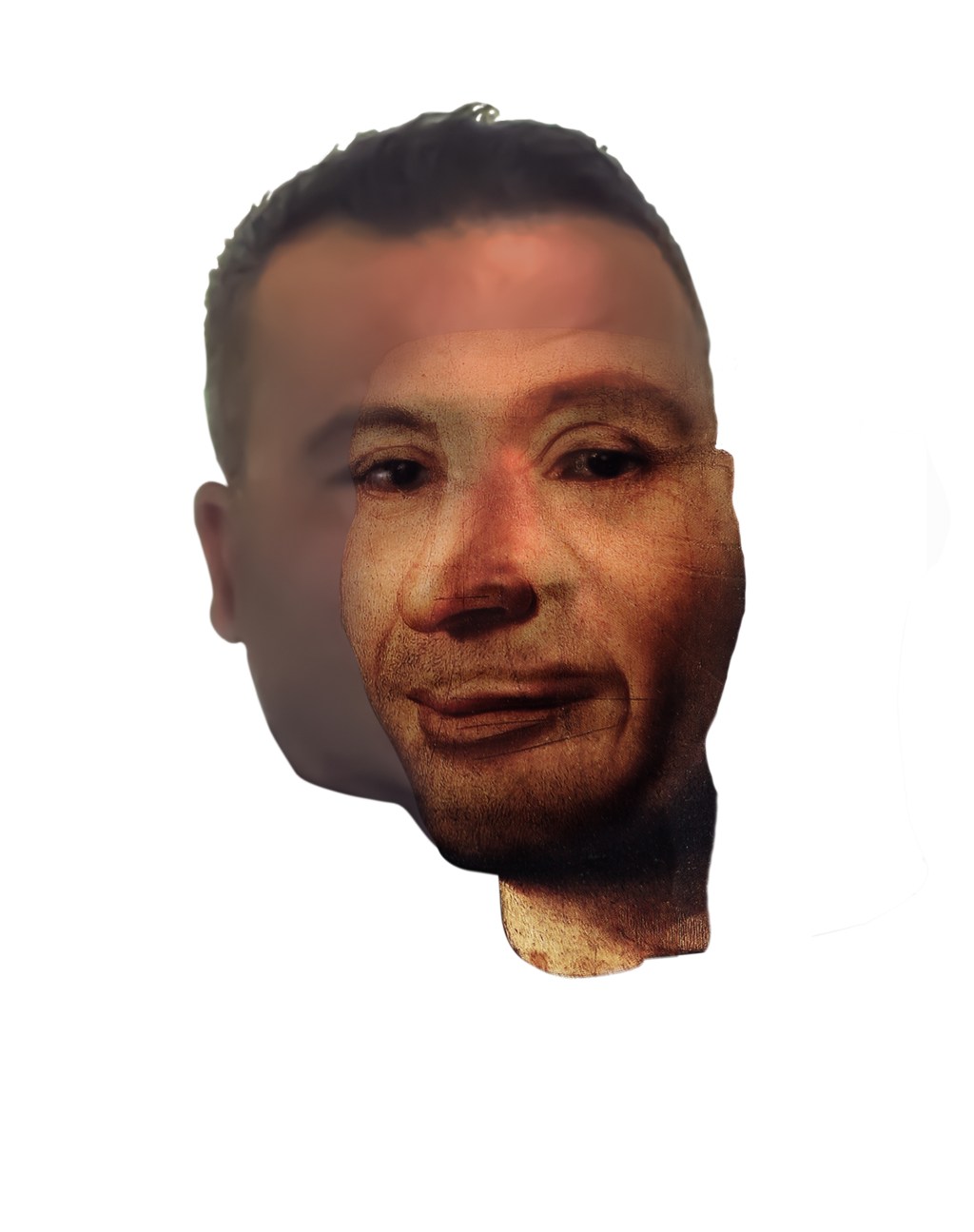
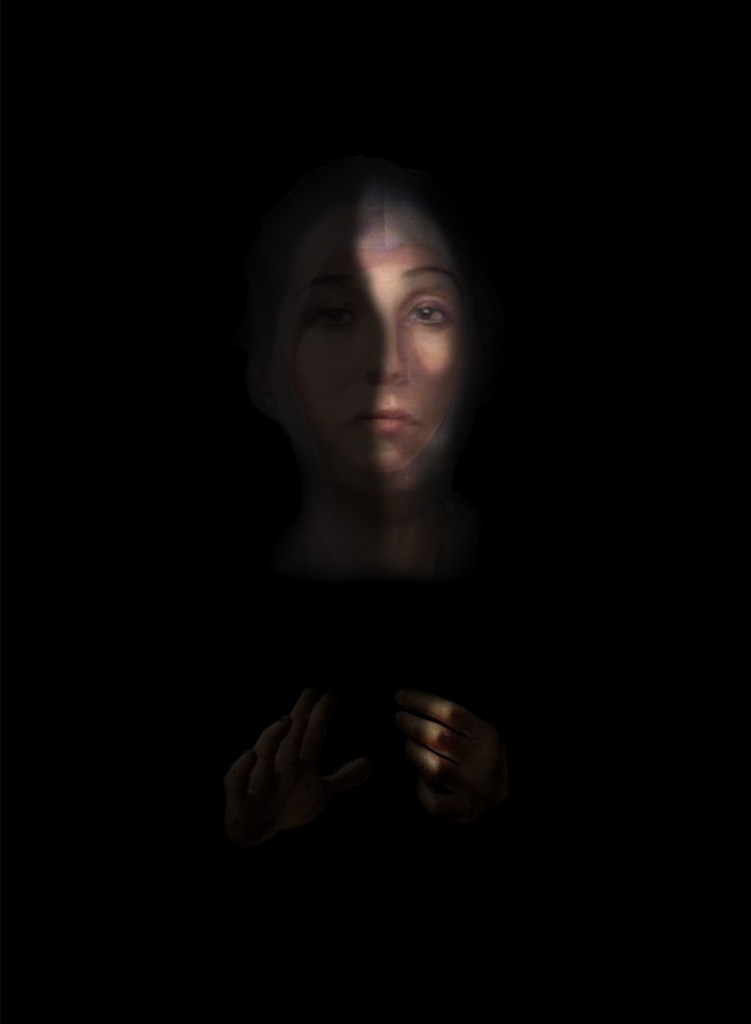
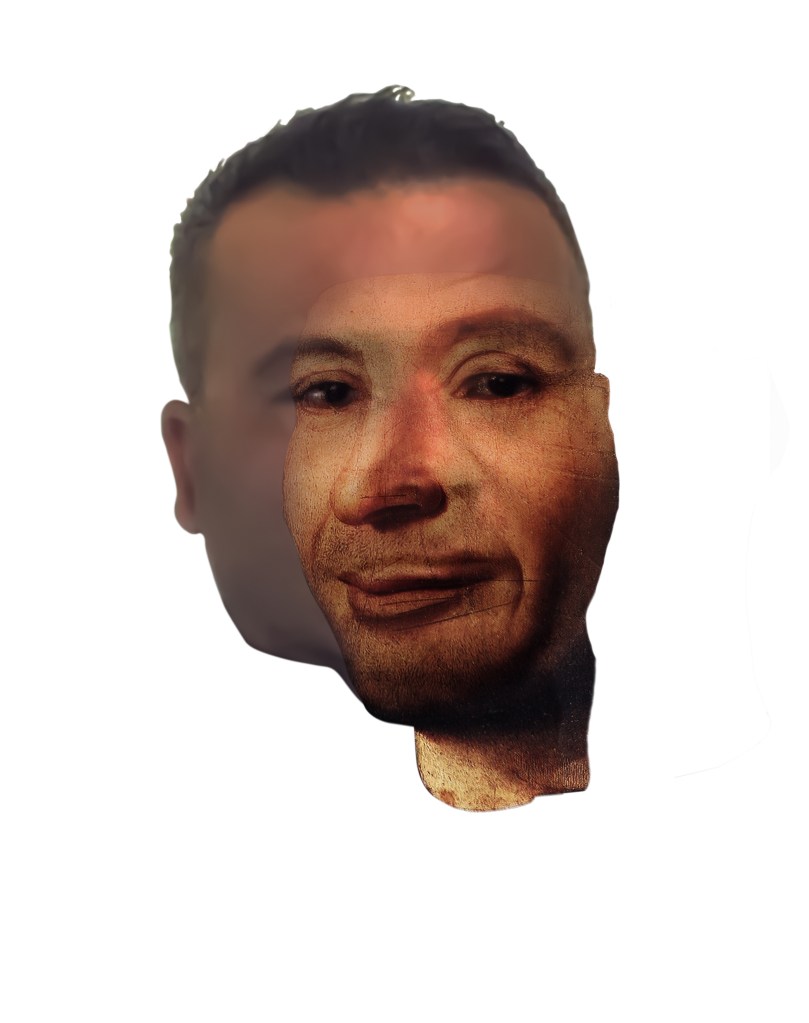
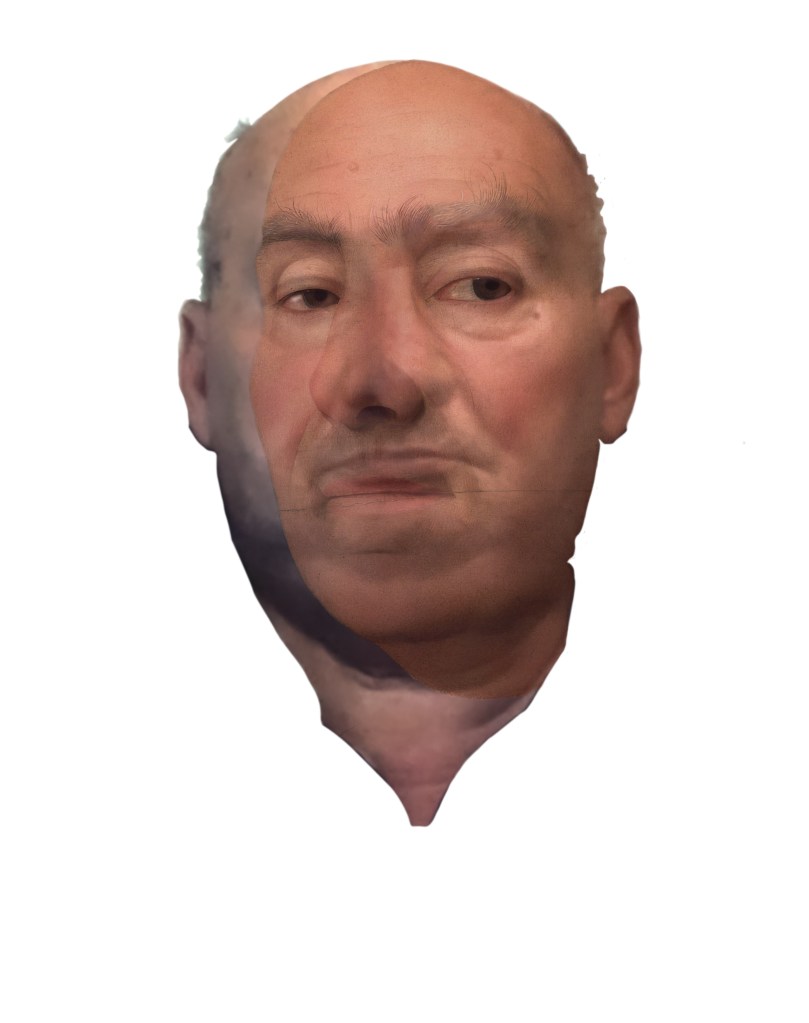
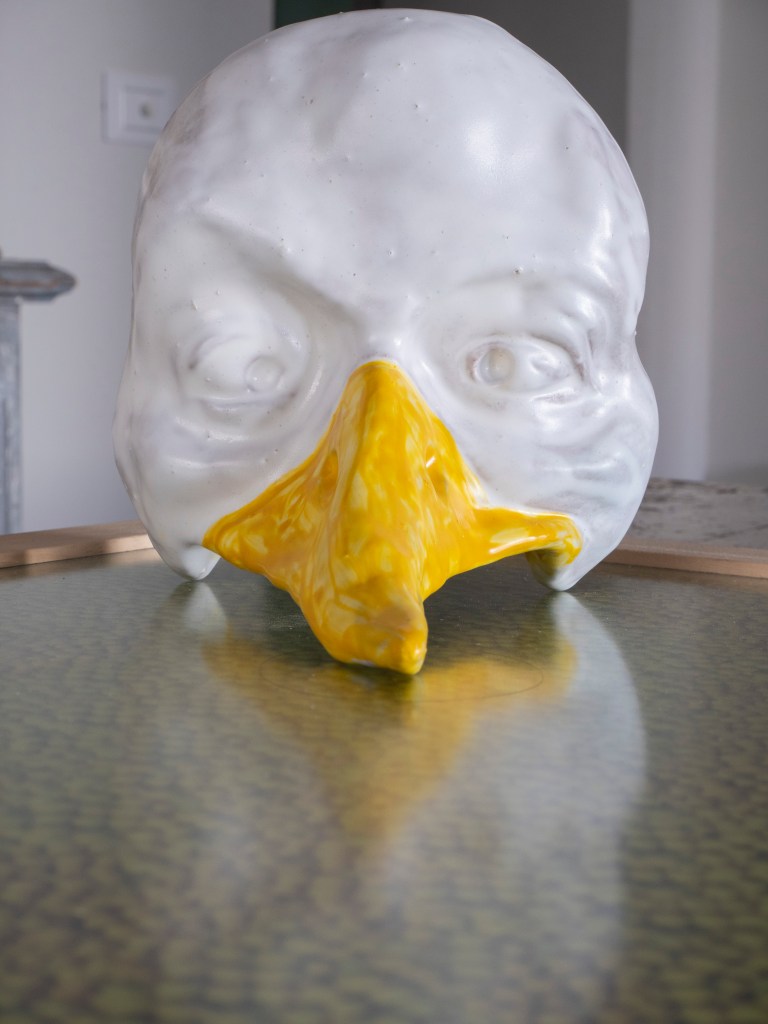
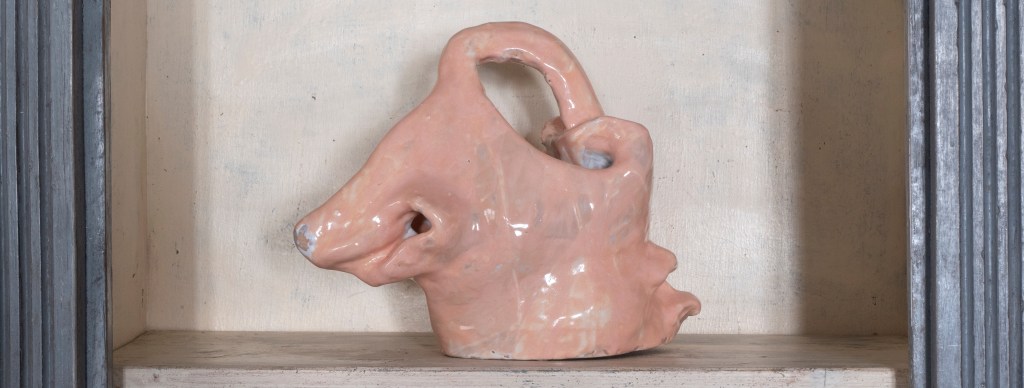
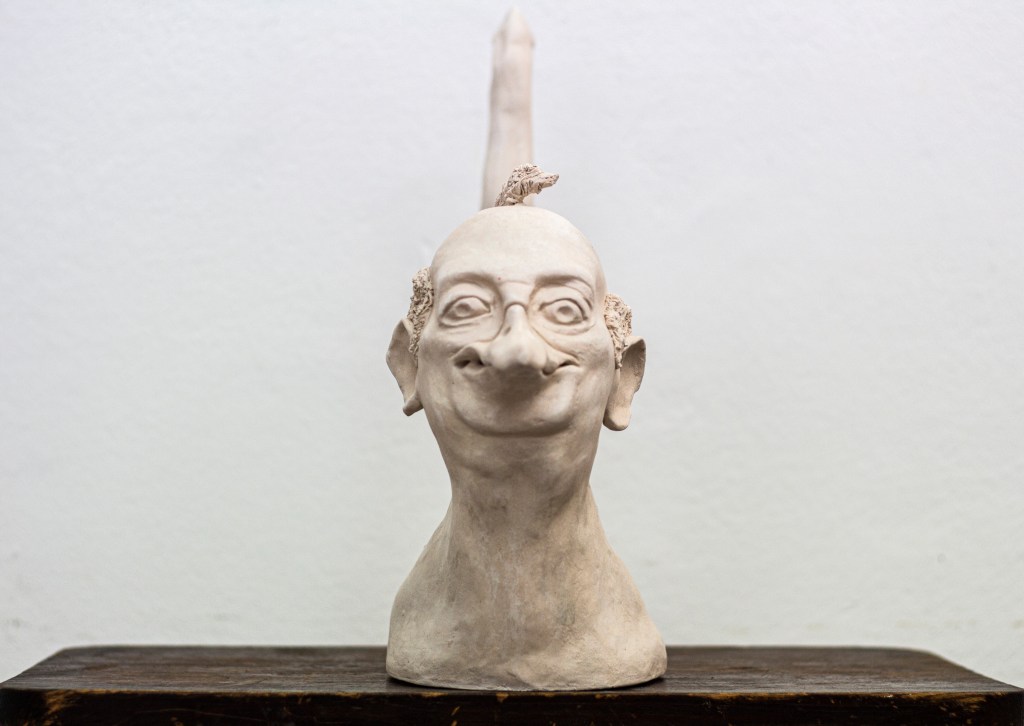
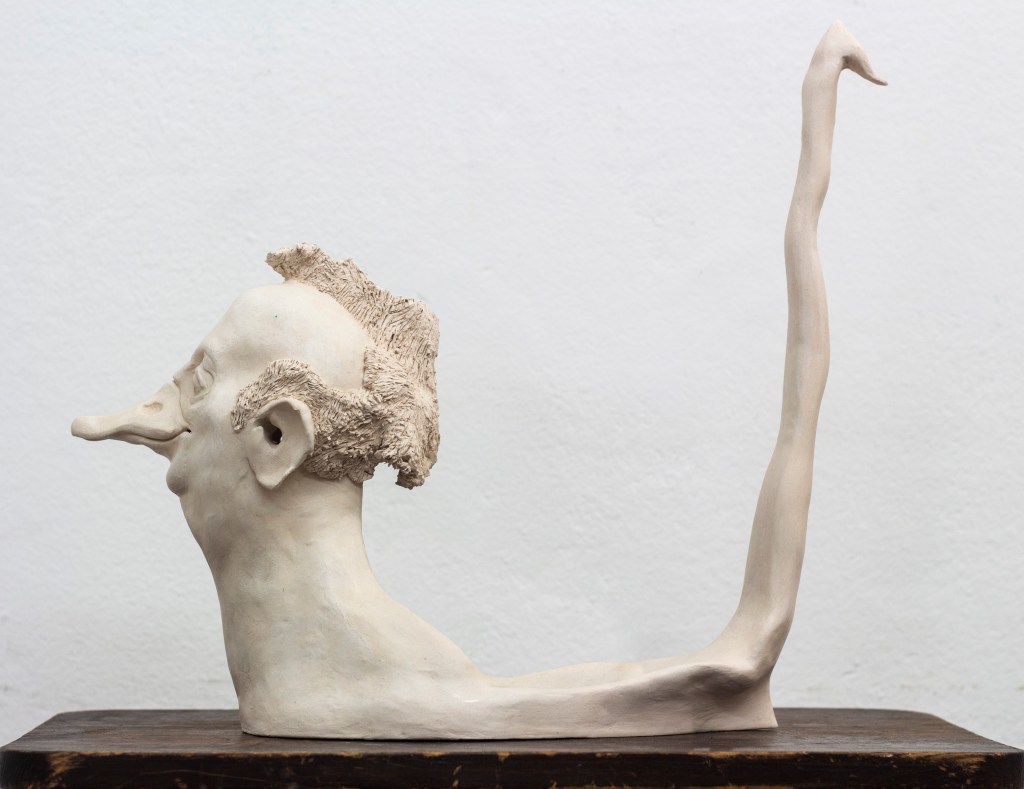
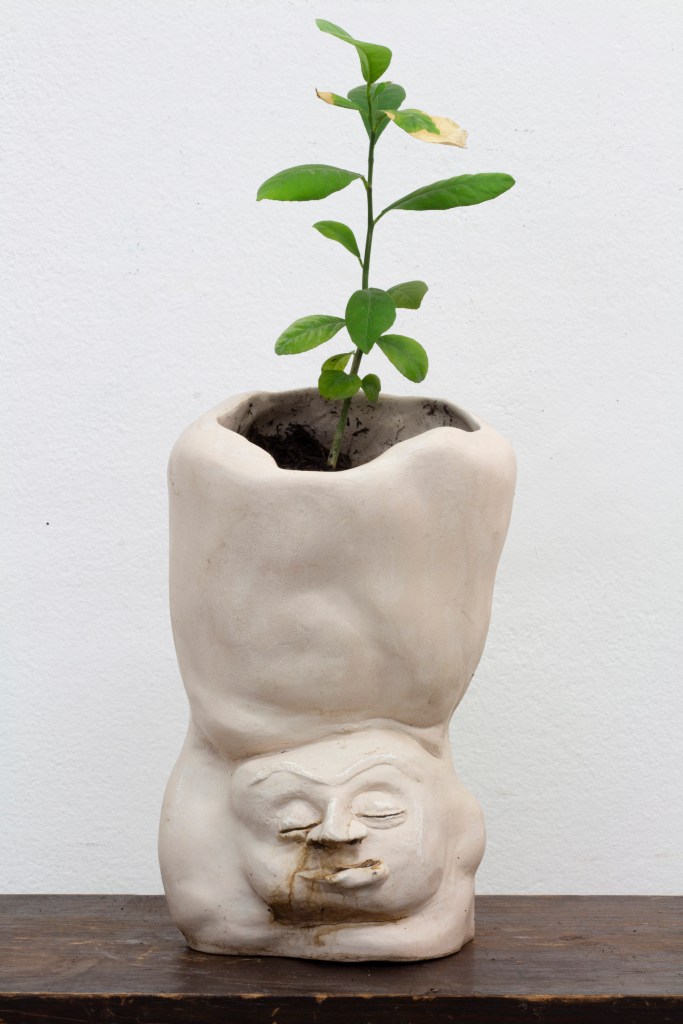
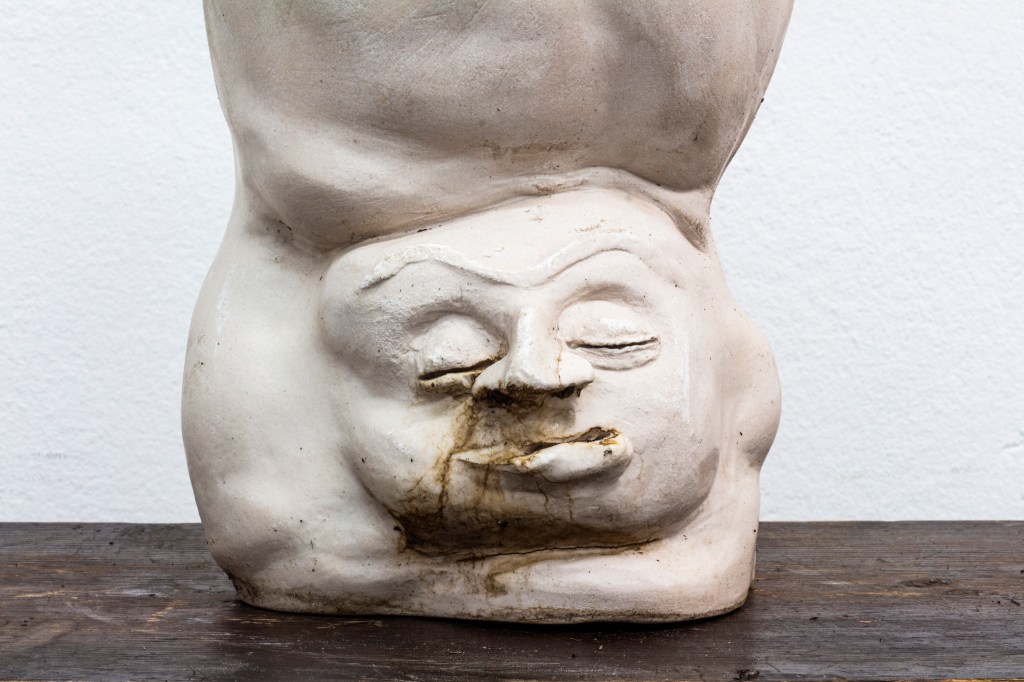
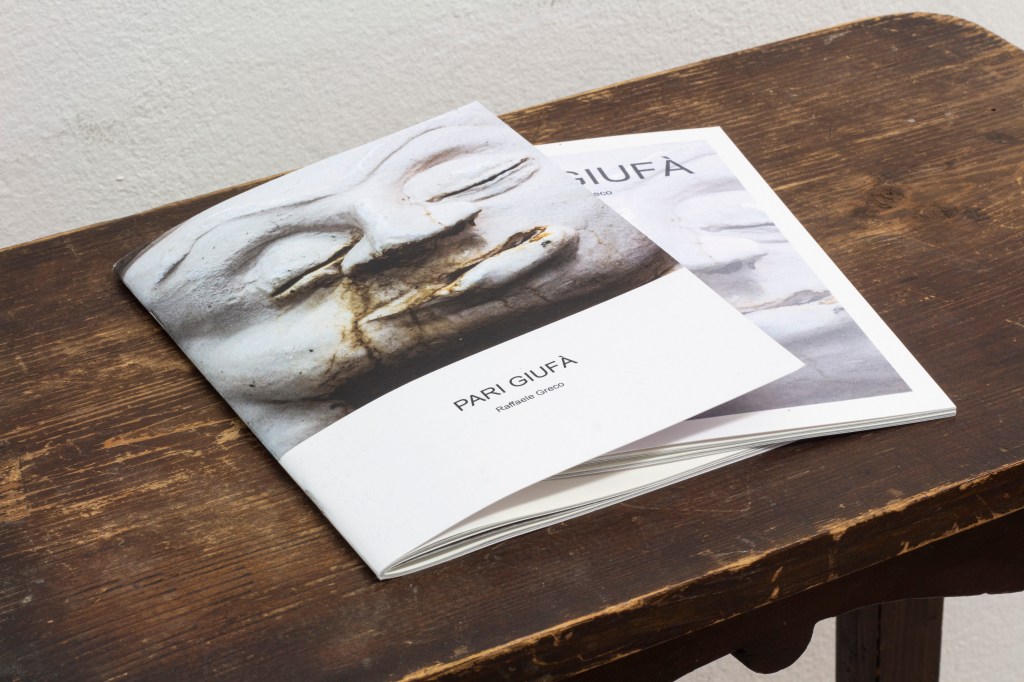
Giufà è un modo di camminare incerto, ma che consente di muoversi da un punto all’altro. Giufà è soglia di attraversamento, che una volta valicata consente crescita e consapevolezza. Giufà è una faccia buffa che contiene verità, ma si deve essere capaci di scorgerla e coglierla, di non rimanere in superficie: una faccia a cui è caduta la maschera. Giufà è una storia raccontata che diventa tutte le storie, ancora meglio, tutte le storie approdano a Giufà e poi vengono valicate, superate. Giufà è ironico, un’epifania che deriva dal riso, che nasconde la nostra vera natura. Giufà non si prende sul serio, questo è il suo modo di essere ovunque, in ogni luogo e in ogni tempo.
Giufà è poesia, se gli chiedeste di darvi una bussola, lui vi regalerebbe una nuvola.
Critical Text by Francesca Greco
“There are also those who think I’m an idiot, I’ve never figured out why. In truth, I was so sick at one point that I wasn’t much different from an idiot; but how is it possible that I’m still considered an idiot now, when I myself first notice that people think of me that way? I walk in and think: ‘They think I’m an idiot, but I’m intelligent, and they don’t even suspect it.’”
Fyodor Dostoevsky, The Idiot
Is Giufà really a gullible fool? No, he makes others believe he is. This is his way of being everywhere, in every place and every time. We think we’re fooling him, but it’s he who fools us. Giufà is a warning of what one should not become – “Don’t be a Giufà!” mothers and fathers warn – yet, day by day, we all become him. At least once, each of us has broken through a door and wandered around the city, showing that we didn’t understand the subtlety and remained at the surface of things.
Who, after all, hasn’t been the village fool, at least once, in their own village?
Giufà is anecdote, a word passed from mouth to mouth, something spoken and unspoken; he flies away like the wind, unwritten but passed down over and over. He has been given a name, but he is not tradition; he is all the things done absentmindedly, unintentionally; he is all the mistakes made that need to be corrected. He is a tool, and as such, one must learn how to handle and understand him.
Giufà is a way of walking, uncertain but allowing you to move from one point to another. Giufà is a threshold to be crossed, and once crossed, it leads to growth and awareness. Giufà is a funny face that contains truth, but you must be able to see and grasp it, not remain on the surface: a face whose mask has fallen off. Giufà is a story told that becomes all stories, or better yet, all stories lead to Giufà, and then are crossed, surpassed. Giufà is ironic, an epiphany that comes from laughter, hiding our true nature. Giufà doesn’t take himself seriously; this is his way of being everywhere, in every place and every time.
Giufà is poetry; if you asked him for a compass, he would give you a cloud.
 raffaelegreco.blog